


How to select materials for the design and processing of rotomolding molds?

When I choose materials for Rotomolding Molds, I look for durability and heat resistance first. Good machinability helps me work faster. Cost-effectiveness lets me keep my project on budget. I often use aluminum or steel because these metals give strong results and help my molds last longer.
Key Takeaways
- Choose mold materials based on heat resistance, strength, and how many parts you need to make to get the best results and save money.
- Aluminum molds heat up fast and are easy to shape, making them great for quick, detailed jobs, while steel molds last longer and suit large, long-term projects.
- Always consider the product’s safety rules, handling needs, and maintenance when picking mold materials to keep your molds working well and lasting longer.
Key Factors for Rotomolding Molds Material Selection
Thermal Conductivity and Heat Resistance
When I select materials for rotomolding molds, I always check how well they handle heat. The mold must survive high temperatures during the process. Polyethylene, for example, melts between 480°F and 600°F. If the mold cannot handle these temperatures, it will not last long. I also look at how fast the mold heats up and cools down. Aluminum molds heat and cool much faster than steel molds. This means I can finish more cycles in less time. Here is a table that shows the differences:
| Property | Aluminum Mold | Steel Mold |
|---|---|---|
| Thermal Conductivity | Nearly 5 times higher than steel; enables faster heat dissipation and shorter production cycles | Lower thermal conductivity; slower heat transfer |
| Production Suitability | Ideal for low-volume, quick turnaround, and frequent design changes due to fast heating/cooling | Best for high-volume, long-term production due to strength and durability |
| Durability | More prone to wear due to rapid expansion/contraction | High strength and longevity, resists deformation |
| Machinability | Easier to machine and modify, reducing repair costs | Heavier and harder to machine, higher initial cost |
I always match the mold material to the temperature needs of the plastic I use. This helps me avoid damage and get better results.
Strength and Durability
Strength and durability matter a lot to me. I want my rotomolding molds to last through many cycles. Steel molds work best for high-volume jobs because they stay strong and keep their shape. They cost more at first, but they save money over time. Aluminum molds cost less and work well for short runs. They do not last as long as steel, especially when I use them every day. I always think about how many parts I need to make before I choose the material.
Weight and Handling
Weight affects how I move and set up my molds. Aluminum molds weigh less than steel molds. I can lift and install them more easily. This saves time and lowers the risk of injury. When I need to change molds often, I pick lighter materials. Heavy steel molds work better for big, long-term projects where I do not need to move them much.
Corrosion Resistance
Corrosion can ruin a mold. I always check if the material will rust or react with the plastics or chemicals I use. Some plastics, like PVC, release gases that can corrode metal. I use protective coatings to stop this. Here is a chart that shows how different coatings protect molds:
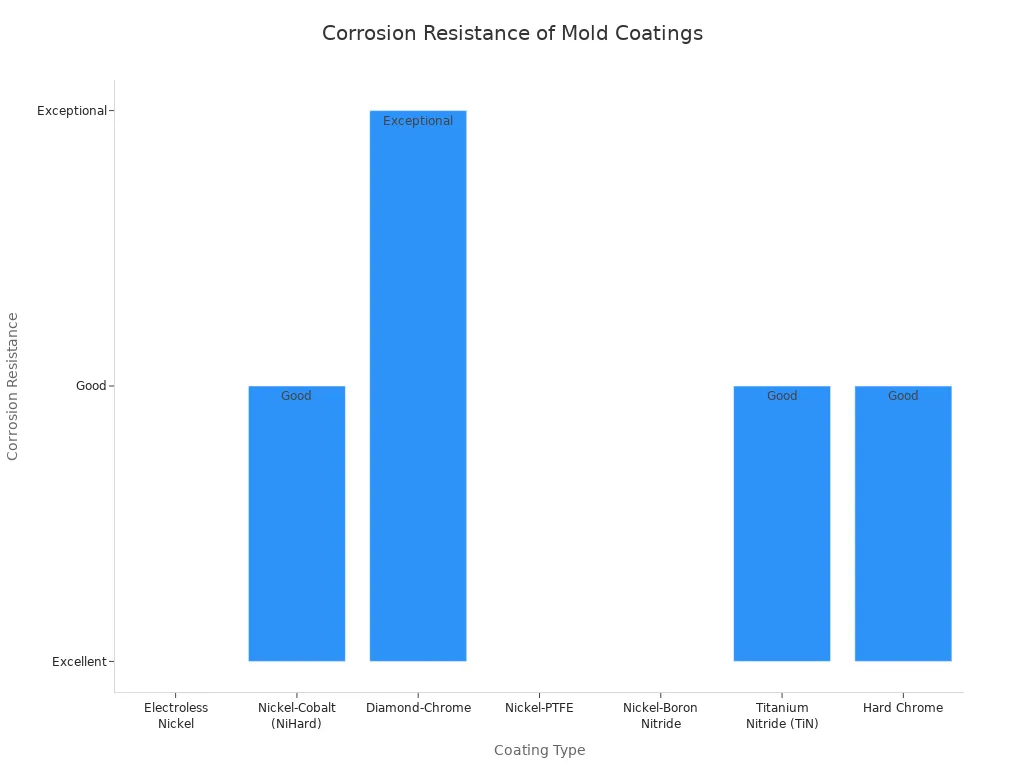
Electroless nickel and diamond-chrome coatings give excellent protection. I pick the coating based on the type of plastic and the mold’s working environment.
Machinability and Processing Ease
I want to make molds quickly and accurately. Aluminum is softer than steel, so I can machine it faster and make complex shapes with less effort. CNC machines help me cut both aluminum and steel, but aluminum takes less time and costs less to shape. When I need a mold with lots of detail, I choose aluminum. If I need a mold that will last longer, I use steel, even though it is harder to machine.
- CNC machining works well for both aluminum and steel.
- Aluminum’s softness makes it easier to create complex shapes.
- Steel molds need more time and stronger tools to machine.
Cost and Production Volume
Cost always plays a big role in my decisions. I balance the price of the material with how many parts I need to make. Aluminum molds cost less and are good for small batches or prototypes. Steel molds cost more but work better for large orders. Over time, steel molds lower the cost per part because they last longer. I also think about repair and maintenance costs. Some materials need special welding or coatings, which can add to the total cost.
Intended Product Use
I always consider what the final product will be used for. If I make parts for food or medical use, I must follow strict rules. For food contact, the mold material must meet FDA standards. In Canada, I need approval from Health Canada. In California, I check for Proposition 65 compliance. For the European Union, I look at REACH rules. Medical products need even more checks and paperwork. Polypropylene works well for medical items because it resists chemicals and can be sterilized. I talk to resin makers to make sure I use the right material for each job.
Tip: Always match the mold material to the product’s safety and regulatory needs. This helps avoid problems later.
Comparing Materials for Rotomolding Molds
Aluminum Rotomolding Molds: Pros and Cons
When I use aluminum for rotomolding molds, I notice several benefits:
- Aluminum molds heat up quickly and evenly, which helps me keep processing stable.
- I get high dimensional accuracy, so my products come out with precise shapes.
- These molds last a long time and are easy to repair or modify.
- Aluminum molds work well for industries like automotive and aerospace, where I need tight tolerances and fine surface finishes.
- CNC-machined aluminum molds have no porosity, so I can add deep textures and get better parting lines.
However, aluminum molds cost more than wood, but they last much longer. I find them best for projects that need fast cycles and high precision.
Steel Rotomolding Molds: Pros and Cons
Steel molds give me strong, durable parts. I use them when I want thicker corners and less breakage. Steel molds last for millions of parts, so I do not need to replace them often. I can refinish them to keep quality high. However, steel molds take longer to heat and cool, which means higher cycle times. The initial investment is higher, but the cost per part drops for big jobs. Here is a table that shows how steel and aluminum molds compare:
| Aspect | Steel Molds | Aluminum Molds |
|---|---|---|
| Initial Investment | Higher | Lower |
| Service Life | Longer | Shorter |
| Cost per Part (Long-term) | Lower for high volumes | Lower for short runs |
| Replacement Frequency | Less frequent | More frequent |
| Suitability for High Volume | Excellent | Less suitable |
| Durability and Repair | Very durable, costly to repair | Easier and cheaper to repair |
Stainless Steel Rotomolding Molds: Pros and Cons
I use stainless steel when I need extra strength and resistance to harsh environments. Stainless steel works well as bushings and inserts inside rotomolded products. I can add these inserts during molding without causing stress. Products with stainless steel inserts survive impacts and outdoor exposure. I often use stainless steel for parts that need to last a long time in tough conditions.
Zinc Alloy Rotomolding Molds: Pros and Cons
Zinc alloy molds offer good detail and smooth surfaces. I find them easy to cast into complex shapes. They cost less than steel but do not last as long. Zinc alloy molds work best for small runs or prototypes. I avoid them for high-volume jobs because they wear out faster than aluminum or steel.
Practical Guide to Rotomolding Molds Material Selection
Matching Material Properties to Application Needs
When I choose materials for rotomolding molds, I always start by looking at what the final product needs. I check the type of plastic I plan to use, like HDPE or LLDPE. I also look for any special certifications, such as food or medical grade, and see if the product needs to be flame retardant or conductive. I use a table to help me match these needs:
| Criteria Category | Examples / Details |
|---|---|
| Base Polymer Type | HDPE, LLDPE, Cross-link |
| Specialty Certifications and Properties | NSF/Food/Medical Grade, UL rated flame retardant, Conductive, RoHS and REACH compliant |
| Functional Requirements | Impact strength, flame retardancy, conductivity, color options |
This table helps me focus on the most important factors for each project. I make sure the mold material supports all these needs before I start.
Checklist for Selecting Rotomolding Mold Materials
I use a checklist to keep my selection process simple:
- What type of plastic will I mold?
- Does the product need special certifications?
- How many parts do I plan to make?
- Will the mold face harsh chemicals or high heat?
- Do I need the mold to be lightweight for easy handling?
- What is my budget for the project?
Tip: I always review this checklist before making a final decision. It helps me avoid mistakes and saves time.
Impact of Material Choice on Mold Design and Maintenance
My choice of mold material changes how I design and care for the mold. Aluminum lets me create detailed shapes and makes repairs easy. Steel gives me strength for long runs but needs more effort to machine and maintain. If I pick the wrong material, I might face higher repair costs or shorter mold life. I always match the material to the job to keep my rotomolding molds working well and lasting longer.
When I select mold materials, I always balance performance, cost, and maintenance. Aluminum works best for lightweight, fast-cycling molds. Steel gives me strength for high-volume jobs. I match my choice to the product’s needs. For special projects, I talk to experts for advice.
FAQ
What is the best way to clean a mold after use?
I always let the mold cool first. Then I use a soft cloth and mild cleaner. I avoid harsh chemicals to protect the mold surface.
How do I know when to replace a mold?
I check for cracks, warping, or worn surfaces. If I see these signs, I plan for a replacement to keep my products high quality.
Can I repair a damaged mold myself?
I fix small dents or scratches with basic tools. For bigger damage, I ask a professional for help. This keeps the mold safe and working well.